Hello!
Thanksto Shammon and gmanphotog for kind replys!
I try once more – my earlier post came out a bit messy!
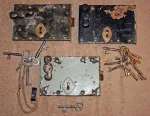
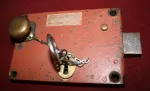
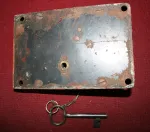
The lockI have is solid and quite simple. Warded – is that the cover on the inside ofthe lock? My lock is a slam lock. When locking, the handle is lifted (notturned) when slamming the door. For double- lock the key is rotated one turn tothe right (or left, depending on derection of door swing). Unlocking byrotating the key opposite direction.
I guess perhaps my lock must be the older type invented byJohn for Pentonville – simple, cheap and less sophisticated? This type was madeby several locksmiths in Britain? The nice form of the brass keyhole plate - canthat be the “key” to the problem? Did both Gibbons and Smith make that design?
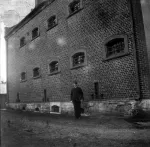
I havethree cell door locks of the same type – two of which working with key. I havestripped one of those for paint, but didn’t notice any identification. Thethird lock was smashed by an angry prisoner, and is not working! In the weekendI will open this and watch closer for traces of the maker. My locks come fromthe same prison, of which I enclose a picture of 1896. The locks were solid,but they demanded attention by the staff – escapes happended by prisonerstricking the guard into the cell and slamming the door! The locks also had thereputation of being easy to pick – with the hook of a hanger etc. In the 1890’s,a officer one night forgot to lock the hatch in the cell door – the prisoner openedthe hatch, and picked the cell door lock open. He didn’t get very far – he wasfound the following morning – stuck in one of the chimnys – black as a wiper!
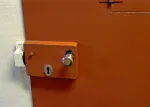
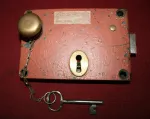
My lockhave quite an impressing service life – from 1865 to 1978 – when the originalcell doors were changed to modern steel doors! I guess the locks must have beenoverhauled a couple of times in their career. And perhaps modified? As a law student,I worked in the summer as a prison officer in one of the bigger 1860-prison in Bergen(closed in 1990). The cell locks there were similar – worked the same way – buthad a small knob coming out of the cover plate - indicating double lock. Canthis be a modification, or were some of these locks originally made like this?I also worked a bit in one of the biggest prisons in Oslo, built in 1934. Thelocks there were made by a locksmith in Oslo, but interestingly as a smallercopy of the type of lock I have, working the same way. They too had the double-lock indicator knob. These lockswere on the outside of the cell door, not slotted into it. I enclose somephotos of this lock.
Hope you find this material interesting.
Best regards
Knut Even