stephane wroteThanks Huw. I will be very happy with relative documents !
Stephane, to add some interest to the latest addition to your collection I have a little historical background for you.
It was the brainchild of H S Brucksaw the brilliant head of design at Chatwood. (attachment 1) He turned conventional safe design on it’s head with the Duplex by putting the materials of strongest resistance on the inside of the body where it would be not only be the last line of defense when fatigue was taking effect but would be difficult to access with tools unless much more barrier material was first removed to give access to the application of the tools available. (see attachment 2) where most of the back of the safe had to be removed to allow the disk cutter to be applied to the inner lining plate).
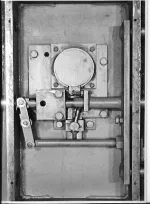
The outer body was 3/16 inch steel and the inner body ¼ inch thick. The door was a hollow steel casting incorporating the lockcase and filled with alag concrete. It had a curved face at the edges and incorporated Chatwood’s Curvilinear patent to prevent the insertion of wedges. The hinges were concealed which meant that it was not possible to determine whether it was right or left handed, The boltwork was one way.
The first vulnerability to attack was that the cast steel concealed hinges shattered if explosives were detonated on the door face which quickly resulted in the addition of a back shooting bolt. (attachments 3 & 4). There was another apparent weakness which was to the benefit of a legitimate opening after an explosive attack on the keylock in that the un-cross-locked re-locker was close enough to the keyhole plug the allow it to be disengaged with a simple probe. Never exploited by criminals to my knowledge.
Future developments after amalgamation included the addition of one top and bottom bolt.
This must qualify as the most successful commercial safe of all time.


I hope that you have recovered from your exertions.
[unknown]


