Just to fill in a few extra details regarding the construction of safe bodies from the 1860’s until the 1930’s.
Firstly, for makers to make any claim of improved strength through the use of 12 corner bent bodies is totally misleading. Such body casings can be bent in this form from 1/16″ to ½″ thickness. It is generally accepted that anything under ¼″ can be ripped, peeled, and generally dismembered by the use of hand tools.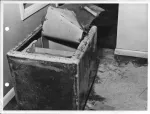
A minimum body thickness of ¼″ wrought iron or steel even in square cornered bodies is more effective than ⅛″ fully bent body as seen above. Even Chatwood used ¼″ plates in his earliest safes such as the List 2 of the 1870’s which had ¼″ wrought iron boiler plate with machine fitted dovetails on all edges on an angle iron framework.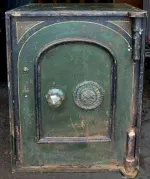
Even in their lowest quality fire-resisting safes, makers such as Chubb, Milner, Hobbs Hart, Geo.Price and Tann used ¼″ plate. The main purpose was not for burglary resistance but to create the strongest structure possible to resist the effect of building collapse in a fire. In fact all such makers also increased the body plate thickness to ⅜″ in the largest sizes to compensate for any possible resultant weakness due to size.
Collectively most of the other makers from Bates to Whitfield aimed their products at the cheapest end of the market with specifications to match. There were occasional exceptions of course when such companies were offered the chance to build much stronger thief-resisting models for special requirements and in such instances would put out the making of the doors and bodies to outside heavy engineering companies with the appropriate machinery such as brake presses and milling machines.

