https://commons.wikimedia.org/wiki/File:Monk_sneaking_a_drink.jpg
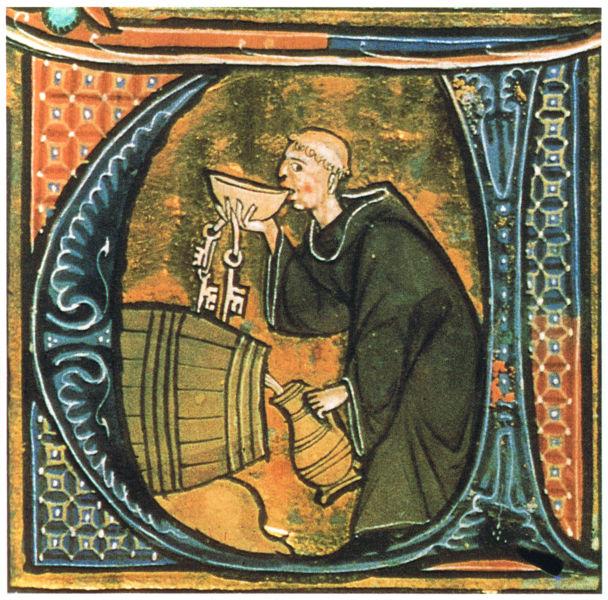
This picture is probably known to many lock collectors. It comes from a 13C French MS Li Livres dou Santé which is now in the British Library, Sloane MS 2435
http://searcharchives.bl.uk/primo_library/libweb/action/display.do?tabs=detailsTab&ct=display&fn=search&doc=IAMS040-002114802&indx=1&recIds=IAMS040-002114802&recIdxs=0&elementId=0&renderMode=poppedOut&displayMode=full&frbrVersion=&dscnt=2&scp.scps=scope%3A%28BL%29&frbg=&tab=local&dstmp=1581445994752&srt=rank&mode=Basic&dum=true&fromLogin=true&vl(freeText0)=%22Sloane%20MS%202435%22&vid=IAMS_VU2
The diligent cellarer is testing the stored wine, and is holding keys with long pointed pins, his being for single-sided door or press locks. (Ancient wine did not keep as well as modern wine. Before being put into glass bottles, modern wine is sterilized by the addition of sulphur dioxide. Ancient wine, stored in casks, was at risk of being converted into vinegar (literally, ‘sour wine’) by the vinegar flies that haunt wine cellars. Hence the need to test stocks periodically. One might add that we have Christian monks to thank for many advances in brewing, winemaking, and production of distilled spirits, as well as beekeeping and candle-making; and advances in agriculture, healthcare, and the provision of public education (long before the State hijacked the word ‘public’ to mean ‘state’).)
There are still some Norman churches in Britain, some with original doors surviving, but original Norman keys remaining in service are scarce. There are a few later Medieval keys still in existence, though still few in service; more are in museums.

