Gary Stephenson wroteI always assumed that they were originally done like that, as they were very well done and looked original, not messed about with, but the one I have pictures of has a plate/details written inside for 1993, maybe when the adaption was done?
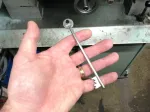
Hi Gary, the one I worked on was a 1992 John Tann size 4 (1629kg) so originally would have had the solid brass cased Tann 10-Lever with the reduced pin gauge keys configured with the bit pointing horizontal on the door- like this one:
Your picture looks to be a final equipment inspectors mark which was usually just a thin adhesive plate or sticker with the crown stamps and date of inspection etc.
All the Proper ID makers stamps are heavily punched into the top centre edge of the boltcase, you have to remove the csk screws and swing the cover open to see them. Everything is there, date, batch, makers name etc all in heavy capitals. Doesn’t matter if it’s a 1967 Stratford with a Manifoil or a 1980 SLS with a keylock, they were all marked the same way in that location.
With the exception of some Chubb’s and a few Tann’s nearly all the makers names were abbreviated to initials, JT, SS, J&FP, RO etc. but whatever the age of the safe, late 1960’s to 1990’s, or size, maker etc you should be able to identify exactly who made it and when.
TBH I cut my teeth on these back in the 80s and 90s so can probably say I’ve battled with just about every conceivable lock-out and failure on most variations they made (except the Mersey one, that was thankfully only a door adjustment and service).
Ive got drawings for just about every pattern and layout they made although size 3s are pretty rare- not a popular size and not many made. If you want any specific detailed info then PM me the details and we can have a chat and I’ll see what I can dig out for ya. 🙁y):
[unknown]


