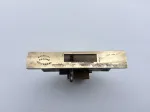
Well an hour or so in the workshop has revealed a couple more surprises.
When I took the original photos I just removed the cover to show the locks simplicity, leaving the bolt in position because of the comb spring.
Removing the bolt for cleaning has revealed another mark in the case. Might be just a foundry mark for the casting, or a makers mark if made by someone else. Perhaps Restell’s locks were made solely by a secondary maker in a similar manner to Joseph Duce who made the balance lever locks for Parsons?
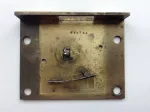
The real surprise for me is the now obvious worn groove in the top of the salvage along the line of the bolt clearly visible on the left..
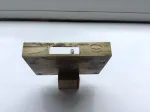
This corresponds perfectly with the sliding action of a worn tailbar ie. safe bolt work. There’s been lots of previous discussions regarding lesser known and smaller Victorian safe manufacturers using locks on their safes from the leading manufacturers like Chubb and Hobb’s.
Ive encountered many in the past, but I’d say without any doubt, going from memory alone that a 4-lever lock with barrel and curtain was the minimum number of levers I’d seen.
Ive also found what appear to be both original keys, although unmarked, both are nearly 2 inches between the bow and back of the bits, so considerably longer than typical cabinet keys and adequately long enough for a typical bolt-case mounted set-up typical of the period.
If this was fitted on a safe, then a 2-lever ‘safe lock’ is definitely a first for me!