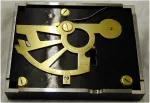
The Hobbs & Co Patent Changeable bank lock is one of the most complex keylocks ever made, it is also one of the most sought after. Many collectors have to wait decades to acquire one, thanks to a huge stroke of luck and the generosity of another collector I obtained this one in trade for another lock after seeking one for only 7 years. The lock is designed, so that every time it is locked it sets itself to the key used to lock it. The key having a variable bit capable of constant re-arrangement.
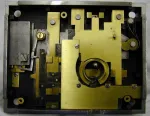
The design is similar to the original American lock made by Day & Newell of New York in the early 1850’s. The lock was introduced to England at the time of the Great Exhibition of 1851 by the Day & Newell salesman & famous lock picker A.C.Hobbs. The lock was improved in 1862 with the introduction of, (amongst other things) an anti-pressure device to effectively frustrate picking.
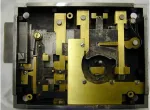
Here the lock is shown with the curtain plate, curtain and clamp plate removed, the complexity and quality of construction is clear. It is hardly surprising that they were extremely expensive at the time. A price list from the late 1880’s quotes a price of ‘from £50’ research has indicated that this was, in some parts of the country the price of a small house. This example has 6 levers, 7, 9, 12 & 15 lever versions are known. The lock is clearly dated, 1863 and numbered : 608 (whether they were numbered consecutively is not clear) another lock known is dated 2/1864 and is numbered : 617
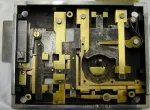
The lock is designed to resist a number of different forms of attack. Firstly explosives which, when this lock was made was ‘gunpowder’ or black powder. Anyone attempting to funnel black powder into the lock had two problems. Firstly the cut-out in the bottom edge of the case meant most of the powder would simply pour out of the lock, but more effective was the brass plug just below the key-pin. This is a taper fitted plug, in the event of an explosion, (which would be confined to the immediate area of the keyhole by the surrounding mechanism) this plug would be blown out the of the back of the lock, thus venting the explosive gases and leaving the lock undamaged.
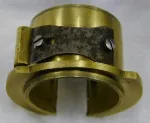
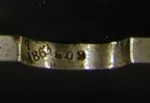

The second method of attack was for the belies of the levers to be smoked or coated with a mixture of lamp-black and glue, this mixture would, when the key is applied show clearly where the steps of the key was making contact with and ceasing contact with the belies of the levers. The marks could then be read with a thin mirror and the readings interpreted to make a key. Such an attack would be fruitless against this lock, the addition of a ‘wiper’ on the top of the curtain means that as the key is turned it wipes the levers clean of any markings or smears.
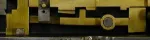
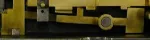
The most effective form of protection is the anti-pressure system, the protection is in two stages, the design is such that no pressure can be applied at all until the levers are lifted and in doing so an interlock at the top right-hand side of the bolt lifted. At this point if all the levers are not simultaneously lifted to the correct height the second part of the anti-pressure system will function. The arm at the bottom of the lock will tip and effectively block the bolt from being withdrawn, with the arm tripped as shown above, even if the levers are raised to the correct heights the bolt cannot be withdrawn. The only was to reset the anti-pressure device is to release all tension and in doing so reset the levers to their rest position.
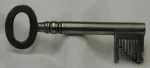
The last two pictures show the key, assembled and in component form. A number of different versions of the keys are known, this size and a longer key with either a solid bit like this one or a very elegant removable bit.
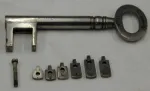
As I am sure will be apparent, a very complex lock, both in it’s construction and to describe in words. One of the ‘ star ’ pieces in my collection. There are currently 26 known examples of this lock (Hobbs version).
